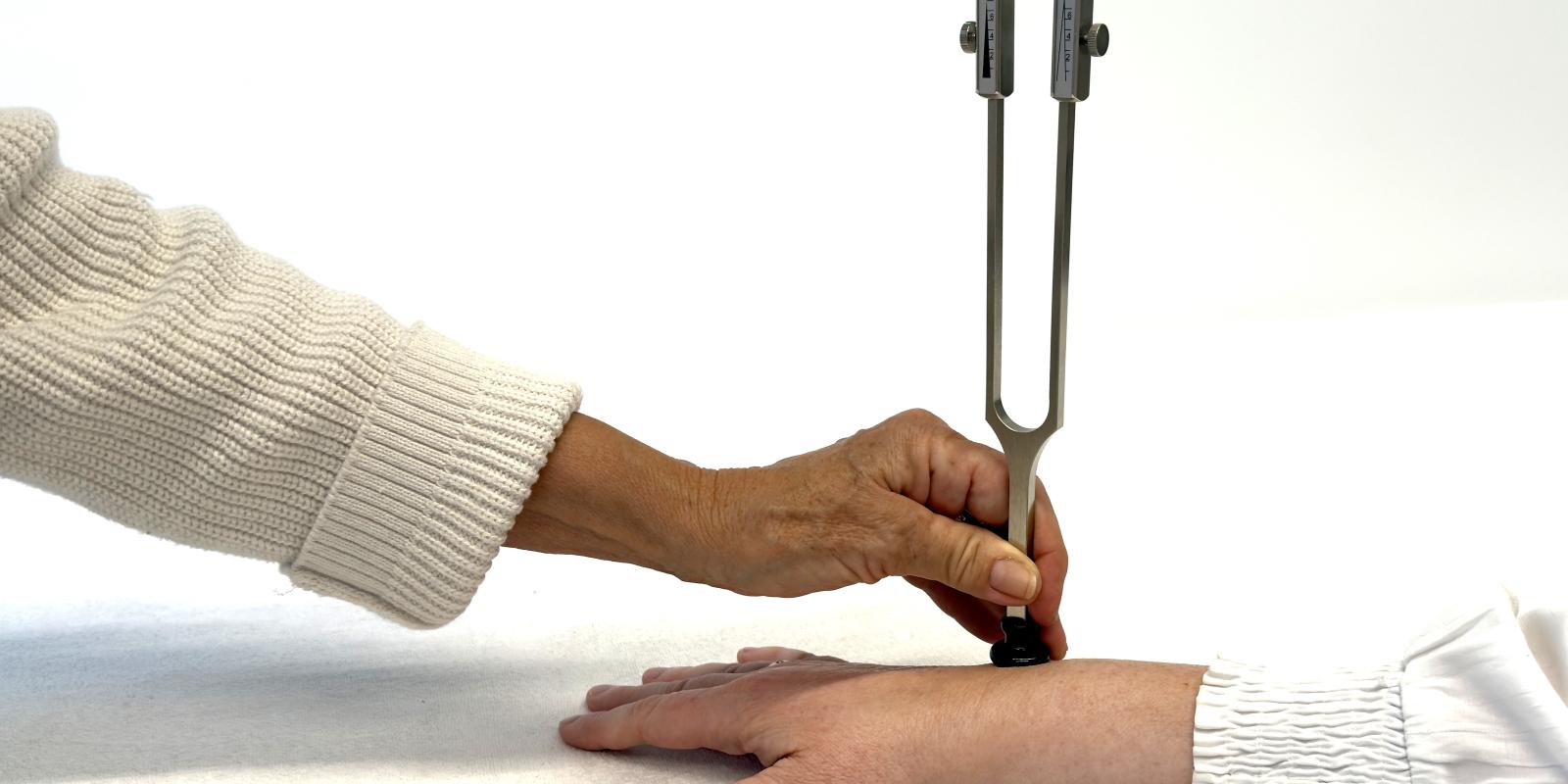
Quantitative Sensory Testing (QST) is widely used in pain research and for assessing pain patients. Now, NAFKAM will apply this method in researching CAM for pain.
What is QST?
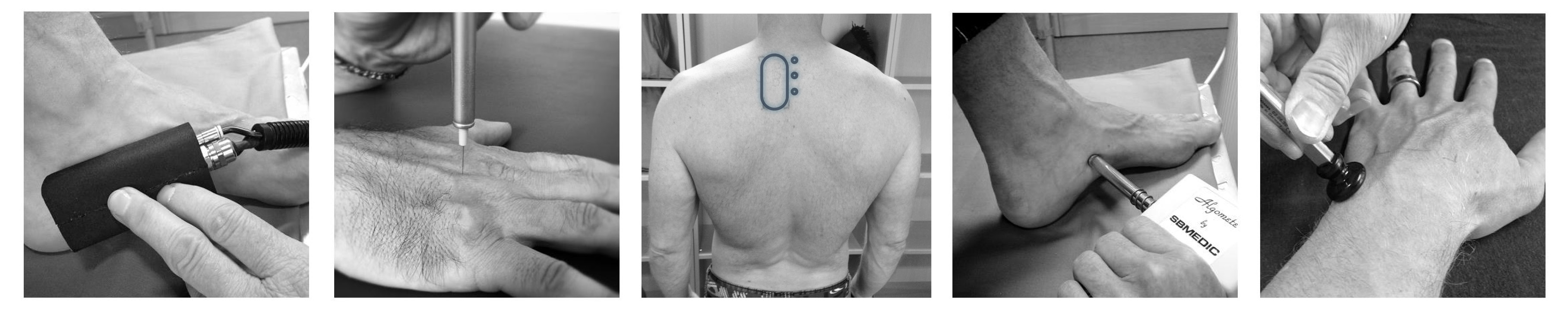
QST measures pain thresholds on the skin at one or more selected sites, following strict protocols. The patient’s skin is stimulated with various instruments while they report if, when or to what degree they feel pain.
The procedure does not expose patients to harmful pain. They control the process by pressing a stop button or signaling when their pain threshold is reached. The testing then stops, and results are recorded. Patients keep their eyes closed throughout.
Tests fall into two main categories: temperature sensitivity and mechanical sensitivity.
- Temperature Sensitivity:
A small computer-controlled metal plate is placed on the skin and gradually heated or cooled to assess temperature perception and pain thresholds. - Mechanical Sensitivity:
This involves different types of touch, vibration, pressure, or pricking using tools such as fine hairs of varying stiffness, weighted metal rods, an algometer for muscle pressure, and a tuning fork for vibration on bone.
Based on these measurements, the researchers can create a pain profile for the patient.
What Does a Pain Profile Show?
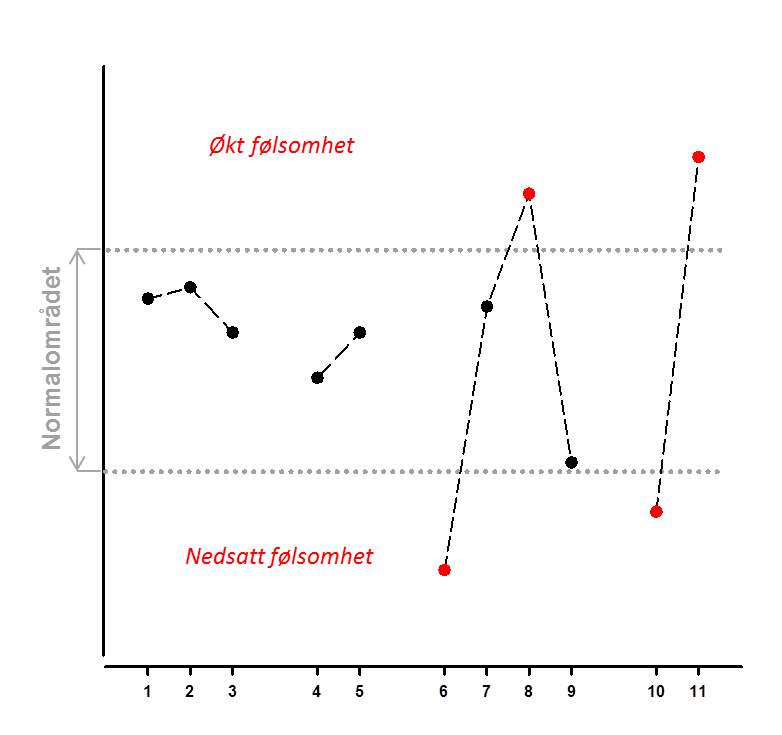
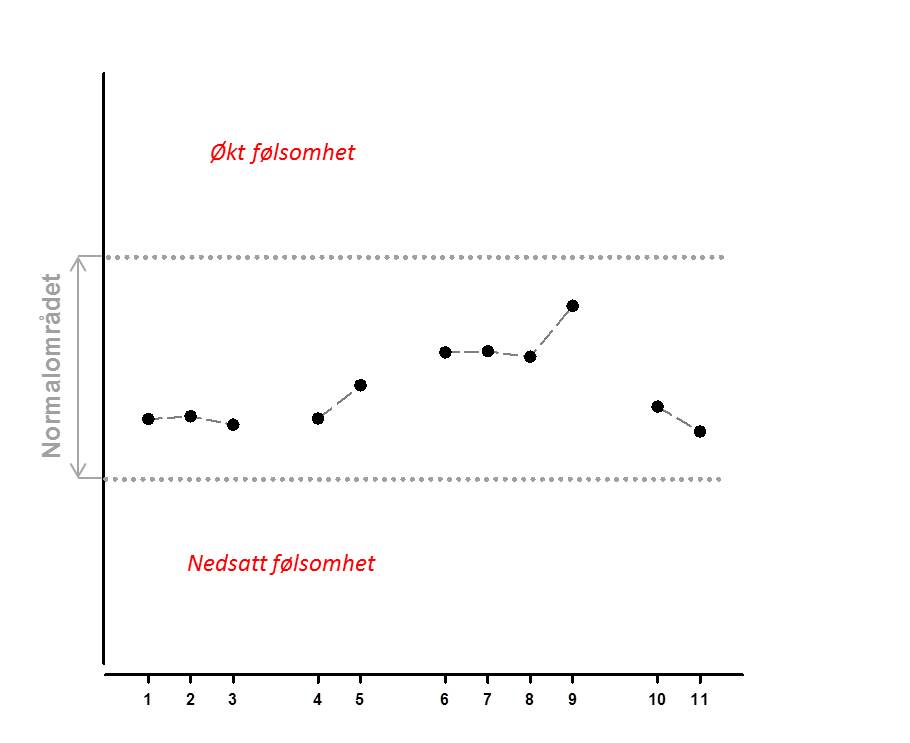
A pain profile visually represents a patient’s sensitivity. Each point in a diagram marks the result of one of 11 QST measurements. For example, a person with neck pain may show values outside the “normal range,” as chronic pain often alters skin sensitivity.
Below is an example of a pain profile, for a person with neck pain:
By contrast, a pain-free individual’s profile typically would fall within more "normal" limits:
Why Use QST when researching CAM?
QST allows researchers to see whether a treatment affects pain, by comparing profiles before and after therapy.
- If the patient reports improvement and measurements move toward normal, the treatment likely has an effect.
- If there’s no significant change and the patient feels no better, the treatment is probably ineffective.
Over time, pain profiles could help identify which treatments work best for different pain conditions—leading to more personalized care.
Ongoing/ upcoming NAFKAM research featuring QST
- Protocol for the MeCNeck (Vacuum Massage vs Tactile Massage for the Treatment of Chronic Neck Pain) Study
- Protocol for STARPOP: Measuring temperature perception and pain detection thresholds with quantitative Sensory Testing in a healthy ARrctic POPulation