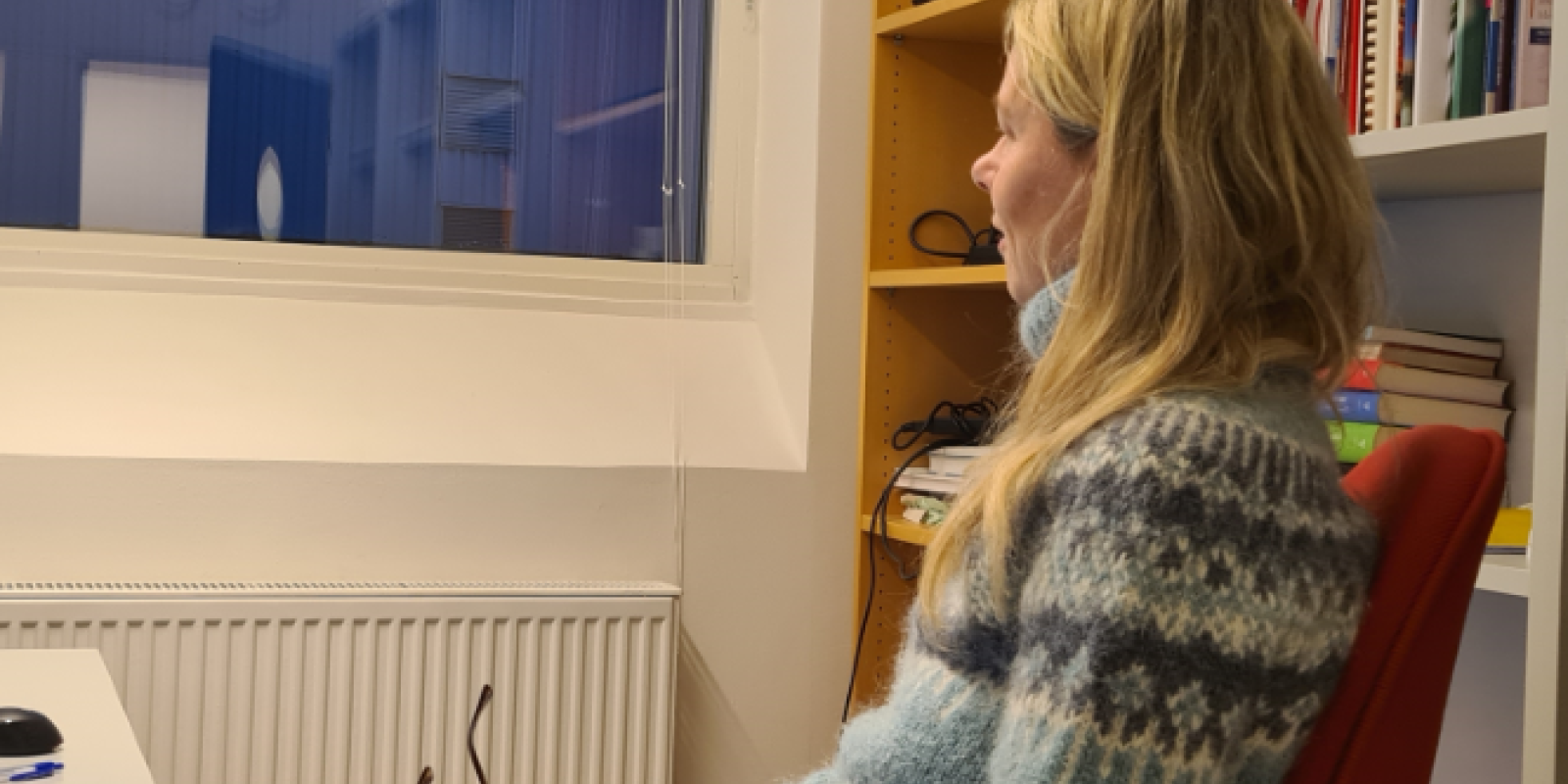
As I look out of my office window on a December morning, with the holiday season approaching, I take a moment to reflect on the year that is coming to an end.
2025 has been an exceptional year for NAFKAM. We marked our 25th anniversary with a series of events both internally and externally, including a full-day conference for the entire UiT community. Together with distinguished guest speakers, we revisited our beginnings and reflected on what we have accomplished. A highlight of the celebration was a warm greeting from Minister of Health Jan Christian Vestre, expressing gratitude and encouragement for our work.
Research That Delivers Results
Data collection for two major clinical studies has been completed. AcuBreast, initiated by our colleague Terje Alræk with funding from the Pink Ribbon campaign in 2018, investigates the effect of acupuncture on fatigue among breast cancer survivors and has enrolled more than 220 patients. Results are expected to be published in the first half of 2026.
The WAYA study, which began as a pilot in 2021, examines the impact of wilderness therapy on mental health and overall quality of life among young cancer survivors, in collaboration with the University of Agder and Mid Sweden University. More than 150 participants have taken part, and initial findings will also be published in 2026.
We have also launched the MecNeck study, which explores the effects of different massage techniques on chronic neck pain.
In addition, NAFKAM received a high evaluation score on its EU application under the HORIZON call for research on late effects among young cancer survivors. Through UiT’s “High Score” program, we secured funding for a three-year postdoctoral position to strengthen research in this area and support future grant applications.
International Engagement and WHO Collaboration
Another key achievement in 2025 was our contribution to the development and finalization of WHO’s new strategy for traditional, complementary, and integrative medicine (TCIM) through 2034. When WHO circulated the draft among its Member States for consultation, Norwegian health authorities sought our advice on how to align with this strategy.
NAFKAM has served as a WHO Collaborating Centre since 2008, and this designation was recently renewed for another four years. We are actively involved in shaping WHO’s research agenda and defining indicators to measure the strategy’s impact. Another assignment from WHO involves mapping the use of traditional medicine among Indigenous peoples and national minorities in the Nordic region. In line with this, we hosted a two-day workshop in Tromsø this autumn with participants from Norway, Denmark, Iceland, and Finland.
We are also pleased to welcome the Polish Cancer League (Polska Liga Walki z Rakiem) as a new partner in CAM Cancer—our international, interdisciplinary network of experts in research, health information, and patient care related to complementary cancer treatment. Together, we aim to promote evidence-based health choices for cancer patients across Europe, grounded in rigorous assessments of the best available evidence on efficacy and safety.
Patient Safety and Knowledge Sharing
NAFKAM’s annual conference on safety in complementary medicine has become a well-established tradition. This year, also Norwegian patient organizations representing cancer, chronic pain, and mental health participated and contributed. Their shared message emphasized the importance of clear, evidence-based information; transparency regarding practitioners’ qualifications and professional background; and practical tools to help patients distinguish between credible and non-credible providers.
Several participants highlighted NAFKAM’s online encyclopedia as an example of such tools. This resource has been further expanded and updated this year, with increased content available in Nynorsk and preparations for versions in Sámi and English.
New Strategic Plan: 2026–2030
As 2025 concludes, so does our strategic plan for 2021–2025—a framework that has guided us in setting priorities and achieving key milestones. We are now preparing for the next five-year strategy (2026–2030). Internal work is underway, and we are engaging with the Directorate of Health and our Advisory Board. Early in 2026, we will distribute a survey to our partners to gather input on priority activities. Our goal is to publish the new strategy before the summer break.
Thank You for Your Collaboration
The proportion of Norwegians using complementary medicine remains significant and has continued to grow in recent years. I extend my sincere thanks to everyone who contributed to NAFKAM’s work in 2025. Together, we strive to safeguard patients who use or consider such treatment, ensuring they can make informed decisions about their health.
To keep our relevancy and impact in this, we must continue close collaboration with both the providers, the public health and care services, and—perhaps most importantly—the patient's societies and organizations. I wish you all a joyful holiday season and look forward to an exciting year ahead in 2026.
Best regards and Season's Greetings,
Miek Jong
Professor and Director, NAFKAM